For Your Consideration
Or The Green Arrow Essay Is Coming Soon I Promise

By the 1980s there were 2 Batmen, 2 Supermen, a Superboy, a half dozen Robins, a Justice League, a Justice Society, and more teenage superhero teams than you could count. This was considered to be entirely too unwieldy by readers. The Batman you read about most times in the newsstands was mostly unchanging, but out there, a version of Batman was a grandfather. Sometimes Superman would have a little grey in his slicked back curls.Now, on the silver screen there are 4 Spider-Man’s, 3 Captain Americas, 3 Mandarins, probably a few Doctor Stranges soon, to name a few. And as the comic book movie boom spearheaded by the Marvel Cinematic Universe nears its second decade of existence, they find themselves at a familiar crossroads.
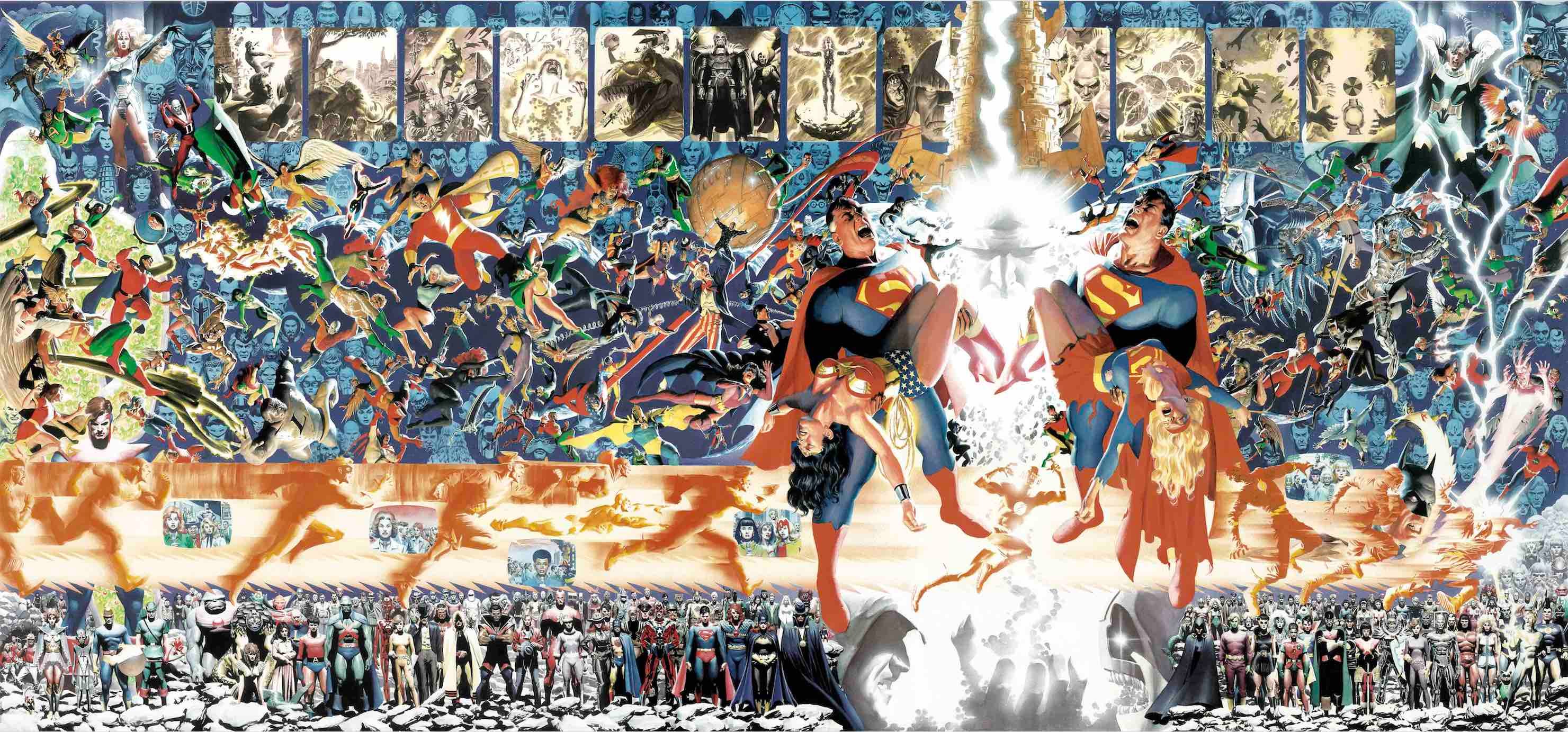
To deal with their unique continuity issues, DC writer Marv Wolfman concocted a unique solution. First seeded in his New Teen Titans book, the idea of a threat to all universes, colloquially known as the Multiverse, was laid. Slowly, the plot lines of close to every single comic being published at DC were wound down in order to prepare for this unknown “Crisis”. DC editorial was hesitant of a linewide crossover, as such a crossover of this magnitude had not yet been tried. When Crisis On Infinite Earths by Marv Wolfman and George Perez first hit the stands on April of 1985, not only did it contain DC characters from their entire current lineup, but, among others, characters they had acquired from defunct competitor companies like Charlton. For the first time in history, all of a companies fictional characters were in one place. From here, it only got worse.
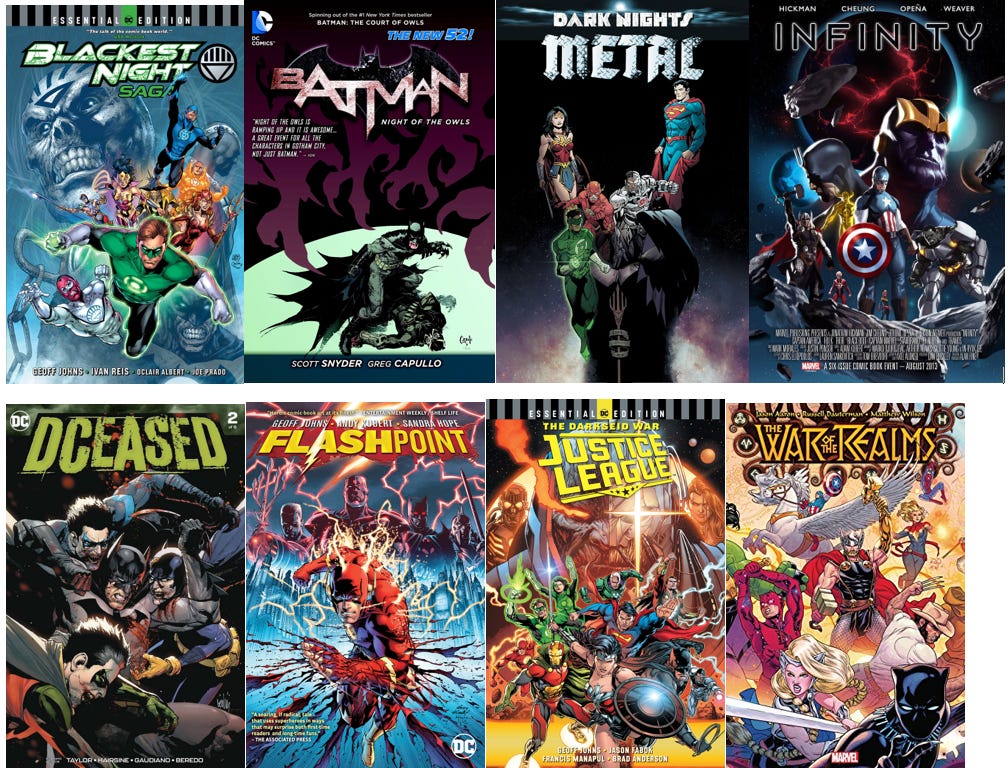
The now famous tagline “Worlds Will live, Worlds Will Die, and the DC Universe Will Never Be The Same” was made true almost immediately as the first issue opens with the instant destruction of multiple universes. Throughout the 12 issues over 100 characters are killed on page, and all but a single universe is left alive by the end. Its not as cynical as I make it sound, in fact the series spends quite a bit of time showing people in mourning, and for a crossover its paced rather slow. That being said, even though Crisis is well written, it is fairly transparent in its editorial manipulation. Most of the characters that die are old, or older versions of characters who have or will have younger versions taking their place. A popular idea among the corporate side of comic book publishing, is a belief that younger characters will always outsell older ones, and at the time the primary new audience for comic books was younger readers. So Kid Flash becomes the Flash, Wonder Woman is reborn as a 20 something, Earth gets a new Green Lantern, etc, etc. Crisis sold incredibly well, and the DC relaunch breathed new life into an old series. Corporate however, took the wrong message from this, and now almost 40 years later every summer an attempt to right the previous years blunders is wrapped up in a massive overproduced event, with diminishing returns each time. Now, their filmic offspring go on to make this same failure, as we shall see.
Among comic book fans, there is a saying, an expression of dislike for the status quo, among the lines of “nobody stays dead in comics”. Originally, characters would die and mostly stay dead, in current year entire events have been constructed around the return of a single character. This sentiment of undying has now been expanded to films produced about comic books and the real space they inhabit. Recently, actor Chadwick Boseman tragically passed away from a cancer he had been hiding from audiences at large. Even though Boseman appeared in over 4 films as his character T’Challa, shortly after his passing marvel fans repeatedly took to social media to demand his character be recast so his personal franchise could continue. Despite having a seemingly magic touch at turning any character into a successful franchise with potentially infinite entries, the idea of losing just one character is tantamount to blasphemy for these consumers. Marvel has turned characters like The Eternals and Black Widow into household names, why can they not turn to the well of IP once more? The answer I believe lies in the nature in which consumption of this content happens.
Within these movie franchises, it is common for fandom rivalry to be based around a numbers game. Nearly all of these movies, from both Marvel and DC, received a healthy profit and yet these fans, most of them children, constantly squabble not over artistic merit, but money. For further argument the critical response is gathered up into a Rotten Tomatoes aggregated score to avoid any actual discussion on substance. Even the creative process is inessential, everything but the actors is just a slot to be filled. The producers of these films know just how superfluous this all is, Disney in particular has perfected a homogeneous lineup of inoffensive and inartistic regular installments of their Marvel franchise. There are countless other reasons to dislike these movies and the modern studio system as a whole; their reliance on taxpayer dollars, unchecked sexual predation, soft alliance with the domestic security apparatus, and avoidance of using union labor, to name a few. However, the one thing this movie machine could not do was cheat time itself, until now.
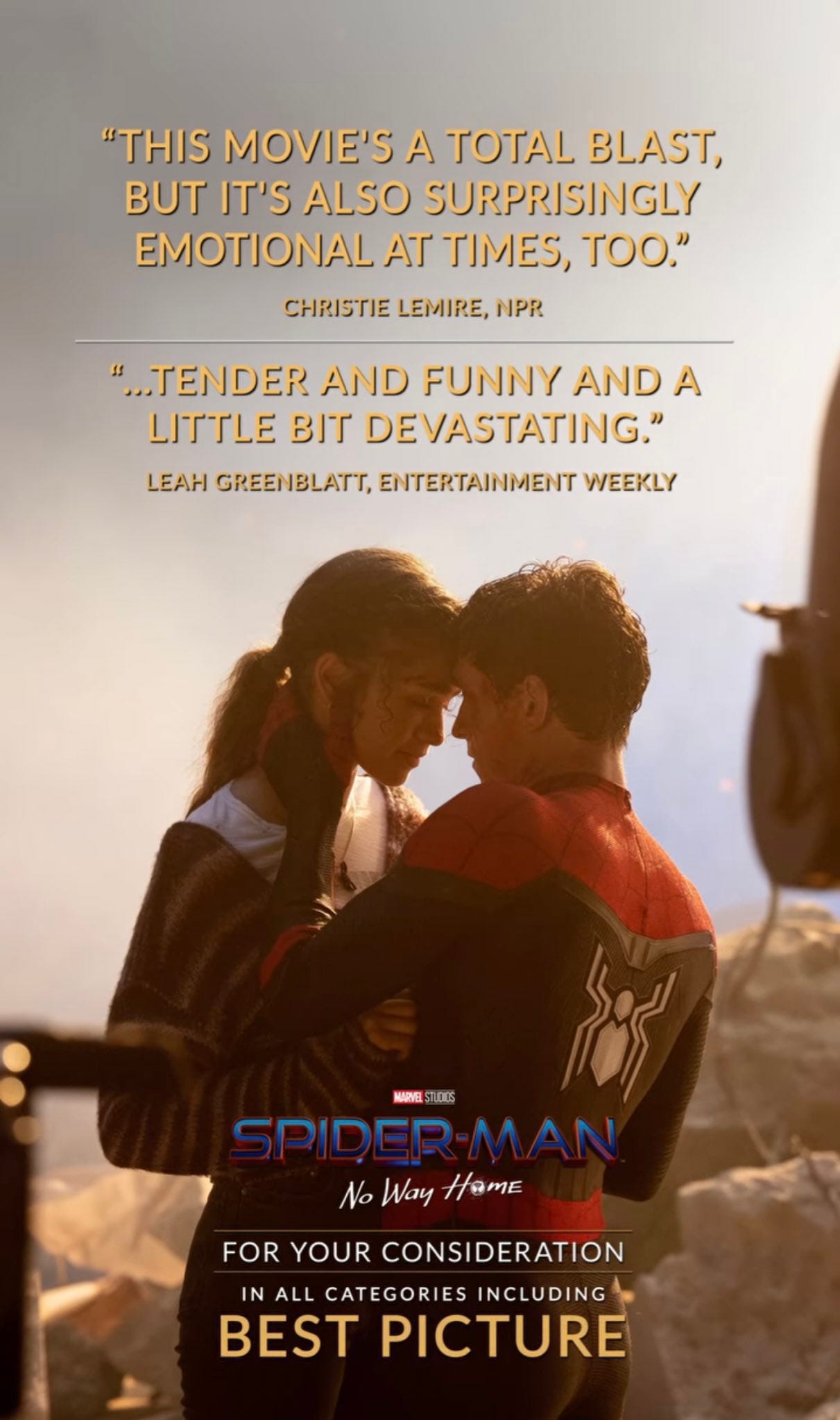
In December of 2021, Marvel Studios in collaboration with Sony Pictures released Spider Man: No Way Home, the end of the MCU Spider-Man trilogy. This film, which featured a crossover with the previous two Sony Spider-Man trilogies, served two semi covert purposes; the first, to irrevocably tie the Sony and Marvel movie franchises together in a sort of feudal alliance, and the latter to effectively raise the stakes from the previous two films without thinking too hard. Previously, they had put themselves in a unique corner: Spider-Man’s identity had been revealed, while audiences had begun to grow tired of a globe trotting high tech portrayal of Spider-Man. The recipe was familiar. a convoluted present, plus a storied past, add in some overzealous corporate suits, and you had the recipe for another Crisis On Infinite Earths. Even the outcome is familiar, No Way Home was one of the most well received movies of 2021, and already a corporate backed push for Oscar nominations has trickled its way out into the world. However, in a cruel twist of irony, where Crisis sought to streamline for modern audiences, No Way Home sought to expand and convolute, offering up more IP for the hungry. Even now, fans wish for more Spider-Man movies, more endless franchises, more opportunities for Crossover Events.
We have finally come full circle, even the new Flash movie allegedly features multiple Batman portrayals meeting one another, hilariously enough in a callback to the 2011 event Flashpoint, one of the worst comic events in my opinion. Everything old is new again as producers scramble to adapt more and more events for the big screen. Crisis, the landmark first event, the good faith origin of these monster events, was adapted for television just a few years back. Any artistry remaining in these mass market shells is surely to dry up in place of premises that seem titillating and new, but so at first was the premise of Crisis On Infinite Earths.